
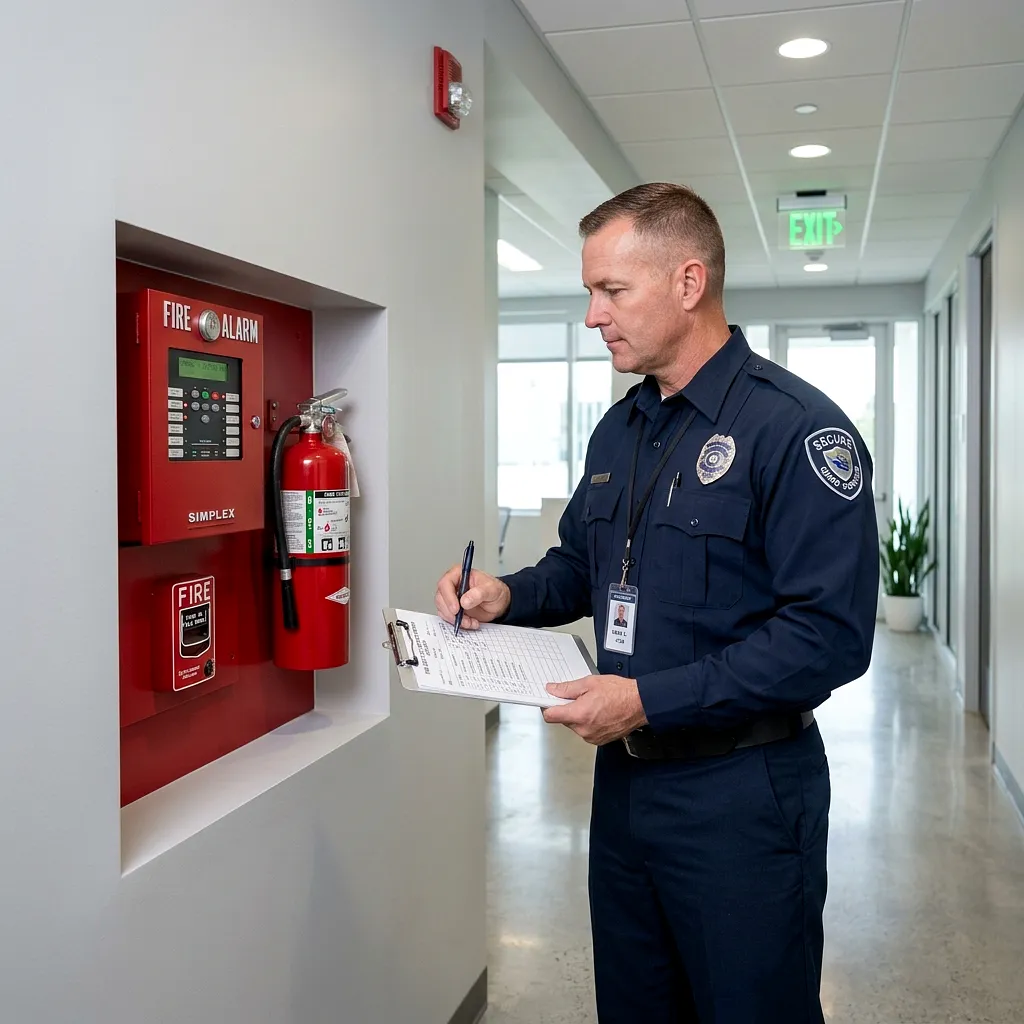
Fire Watch Security Services in Toronto & GTA
Licensed Guards, Same-Day Deployment, 24/7 Coverage
When your fire alarm is offline, your sprinkler is impaired, or hot work is underway, the Ontario Fire Code requires a trained fire watch on site. Supreme Security Services dispatches licensed fire watch guards across Toronto and the GTA, with documented log sheets, fire-panel-trained officers, and a direct line to Toronto Fire Services when it counts.
-
15+ Years in GTAFire watch & security since 2010
-
24/7 DispatchDay, night, weekends, holidays
-
Same-Day DeployOn site, often within hours
-
Documented LogsPer-hour entries for inspectors
Why You Need Fire Watch
When Fire Risk Rises, Compliance Cannot Wait
Fire risks can appear without warning. A sprinkler valve closes for maintenance. A fire panel goes into trouble at 2 a.m. A welder arrives to cut steel on a construction site. In every one of these moments, Ontario Fire Code O. Reg. 213/07 requires a trained fire watch on site, walking the property, checking high-risk zones, and ready to call Toronto Fire Services.
Supreme Security Services fills that gap. Our fire watch security guards are PSISA licensed, briefed on your fire panel and life-safety devices before the first patrol, and trained on NFPA 601 protocols for security services in fire loss prevention. The result: insurer-ready documentation, no compliance gap, and one less thing for your property manager to worry about.
- PSISA Licensed Guards
- Fire-Panel Trained
- 24/7 Rapid Dispatch
When It’s Legally Required
When You Need a Fire Watch in Ontario
Under Ontario Fire Code O. Reg. 213/07, a fire watch must be in place any time a life-safety system is impaired or a high-risk activity is taking place. These are the seven situations we are most often called for.
Fire Alarm Panel Offline
The fire alarm system is in trouble, in test mode, or has been taken out of service for repair. A guard takes over the panel’s job until the system is back online.
Sprinkler System Impairment
A sprinkler valve is shut for inspection, a riser is drained, or a section is offline for repair. Hourly patrols of the impaired zone are required until the system returns to service.
Fire Pump or Water Supply Down
The building’s fire pump fails, water is shut off, or a watermain break disrupts supply. The site cannot fight a fire on its own, so a fire watch fills the role.
Hot Work (Welding, Cutting, Grinding)
Open-flame and spark-producing work needs a dedicated watcher under O. Reg. 213/07, during the work and for at least one hour after. We stay on site through the cool-down window.
Construction or Renovation
Buildings under active construction with no functional fire system, or renovations with temporary alarm shutdowns, need fire watch coverage from start of work to occupancy.
Special Events (Tents, Pyrotechnics, Propane)
Outdoor festivals, tented events, propane heaters, or pyrotechnic displays often require a fire watch as a condition of the permit. We work directly with venues and event organisers.
Post-Fire / Pre-Restoration
After a fire incident, while life-safety systems are being restored, fire watch is required to maintain occupancy and protect the property until inspection clears the building.
Not Sure if You Need One?
Call us. We will tell you in two minutes whether the Ontario Fire Code requires fire watch for your situation, and what insurers will expect to see in the log.
Call 1-877-887-7110 ›What We Cover
Our Fire Watch Security Services
A complete fire watch service goes well beyond walking the building. Every Supreme deployment includes monitoring, documentation, escalation, and a clean handover when the systems come back online.
24-Hour Fire Watch Coverage
Continuous on-site coverage for fire-prone or impaired sites. Day shifts, overnight, weekends, holidays. One supervisor, one number, one bill.
Fire Alarm Monitoring Support
Manual monitoring of the fire alarm panel when the system is degraded, in trouble, or in test, with immediate escalation to the AHJ and Toronto Fire Services.
Emergency Fire Watch Response
Same-day deployment when an alarm fails, a sprinkler is impaired, or a fire incident leaves a building in a vulnerable state. We can be on site within hours across the GTA.
Construction Site Fire Watch
Dedicated construction site security with fire-watch protocols, hot-work permits, and combustible-material monitoring on active builds.
Building Fire Watch (Condo & Commercial)
Residential towers, commercial offices, retail plazas, and mixed-use buildings. Pairs cleanly with our concierge security for full-coverage condos.
Ontario Fire Code Compliance Checks
Pre-deployment walk of the site to confirm exits, extinguishers, hydrants, and clearance distances meet code, so the fire watch log reads clean for the inspector.
Documented Incident & Patrol Reporting
Per-hour log entries, photo evidence where appropriate, and a written incident report after every shift. Insurer-ready and inspector-ready.
What a Shift Looks Like
The Role of a Fire Watch Security Guard
Fire watch is not just “a guard walking around.” The Ontario Fire Code expects specific tasks, on a specific cadence, with a written log. Here is what our officers do on every shift.
- Patrol the impaired zone or full property on the cadence agreed with the AHJ (typically every 30 or 60 minutes).
- Monitor the fire alarm panel and immediately escalate any trouble, alarm, or supervisory signal.
- Identify and remove fire hazards: blocked exits, stored combustibles, propped fire doors, faulty heaters.
- Assist with evacuation if needed, direct occupants to exits, account for vulnerable residents.
- Call Toronto Fire Services (or local department) on confirmed fire, smoke, or system failure.
- Sign the per-hour log entry, time stamped and floor by floor, for the inspector and the insurer.
Compliance & Training
Built on the Standards Inspectors Actually Cite
Every Supreme fire watch deployment is built on the four standards Ontario fire inspectors, insurers, and AHJs work from. We train to them, document against them, and hand you a log book that reads cleanly when anyone asks.
Ontario Fire Code, O. Reg. 213/07
The Code that defines when a fire watch is required, the cadence of patrols, and the documentation expected. We train every officer to it before deployment.
NFPA 601: Security Services in Fire Loss Prevention
The North-American standard for the security industry’s role in fire prevention, used by Ontario AHJs and major insurers as the reference for what a fire watch should look like.
NFPA 101: Life Safety Code
The standard our officers reference for exit integrity, occupancy, and evacuation. Especially relevant for healthcare, hospitality, and high-rise residential.
Ontario PSISA Licensing
Every Supreme fire watch officer is licensed by the Ministry of the Solicitor General under the Private Security and Investigative Services Act, with valid ID carried on duty.
How a Fire Watch Shift Runs
Our 5-Step Fire Watch Process
From the first call to the final log entry, every fire watch deployment follows the same five steps. No surprises for the property manager, no surprises for the inspector.
-
1
Rapid Dispatch & Site Brief
Call comes in, dispatcher confirms the situation (alarm down, hot work, sprinkler impairment), and the nearest licensed officer is on the way. Often on site within hours.
-
2
Property & Panel Walk-Through
The officer walks the property with your maintenance lead or super, learns the fire panel, locates extinguishers, hydrants, exits, and notes any pre-existing hazards.
-
3
Scheduled Patrols on Code Cadence
Patrols every 30 or 60 minutes as the AHJ requires, covering every floor of the impaired zone, with floor-by-floor time stamps in the log book.
-
4
Documented Log Entries
Every patrol logged, every observation recorded, every alarm or trouble signal noted. This is the document the inspector and the insurer will both ask for.
-
5
Escalation & Clean Handover
On a confirmed event, we call Toronto Fire Services and coordinate on site. When the system is restored, we hand back a complete log and a written incident report.
Why Hire a Licensed Fire Watch
Licensed Fire Watch vs. Untrained Staff vs. No Coverage
When the alarm goes offline, some property managers ask their building super or a security guard already on site to “keep an eye on things.” Here is what the Ontario Fire Code, your insurer, and an actual emergency will see.
| Supreme Fire Watch | Untrained Internal Staff | No Fire Watch | |
|---|---|---|---|
| O. Reg. 213/07 compliant | Yes | Rarely | No, code violation |
| PSISA licensed | Every officer | No | No |
| Per-hour written log | Insurer-ready | Inconsistent | None |
| Fire-panel trained | Yes, before shift | Variable | No |
| NFPA 601 protocols | Yes | No | No |
| Same-day deployment | Yes, GTA-wide | If on shift | No |
| Insurance exposure | Covered | Risk on property | Risk on property |
For most Ontario buildings, a licensed fire watch is the difference between a closed-out file and a fire inspector return-visit, between a paid claim and a denied one.
Where We Deploy
Properties We Provide Fire Watch For
Every property type below has had a Supreme fire watch officer on duty in the last twelve months across the GTA.
- Condo & residential towers
- Apartment buildings
- Construction & renovation sites
- Commercial offices
- Retail plazas & shopping centres
- Industrial & warehouse facilities
- Hospitals & healthcare
- Hotels & event venues
- Schools & campuses
- Parking garages & electrical vaults
Where We Cover
Fire Watch Across Toronto & the GTA
Our dispatch operates from Concord, with officers staged across the Greater Toronto Area and southern Ontario for same-day deployment.
- Toronto
- Mississauga
- Brampton
- Vaughan
- Markham
- Richmond Hill
- Hamilton
- Milton
- Oakville
- Burlington
Head office: 3100 Steeles Avenue W, Unit 206, Concord, ON L4K 3B8. Dispatch line: 1-877-887-7110.
Verified Google Reviews
What Property Managers Say
A snapshot of recent reviews from clients across the GTA, covering fire watch, condo security, and ongoing site coverage.
FAQ
Fire Watch Security: Frequently Asked Questions
Straight answers about when fire watch is required in Ontario, how fast we can deploy, what is in the log book, and what it typically costs.
Need Fire Watch Today? Get a Free Quote.
Tell us your property type, the situation (alarm down, sprinkler impaired, hot work, construction), and when you need coverage. We will respond fast, often within the hour for emergencies.
- Written quote, no obligation
- Same-day deployment, GTA-wide
- PSISA-licensed, NFPA 601 trained
- Insurer-ready logs and reports
Request Fire Watch Coverage
Takes under 60 seconds. Emergency requests get a call back within the hour.